Casino Night Party Ideas: Games, Setup, Food & Decor
September 4, 2026
A good pub offers more than drinks, music, and live sports. Sometimes a group wants to add a little activity, friendly competition, or excitement to the usual conversation. There is no need to plan an elaborate program. The right game simply needs to match the size of the group, the guests’ mood, and the amount of time available.
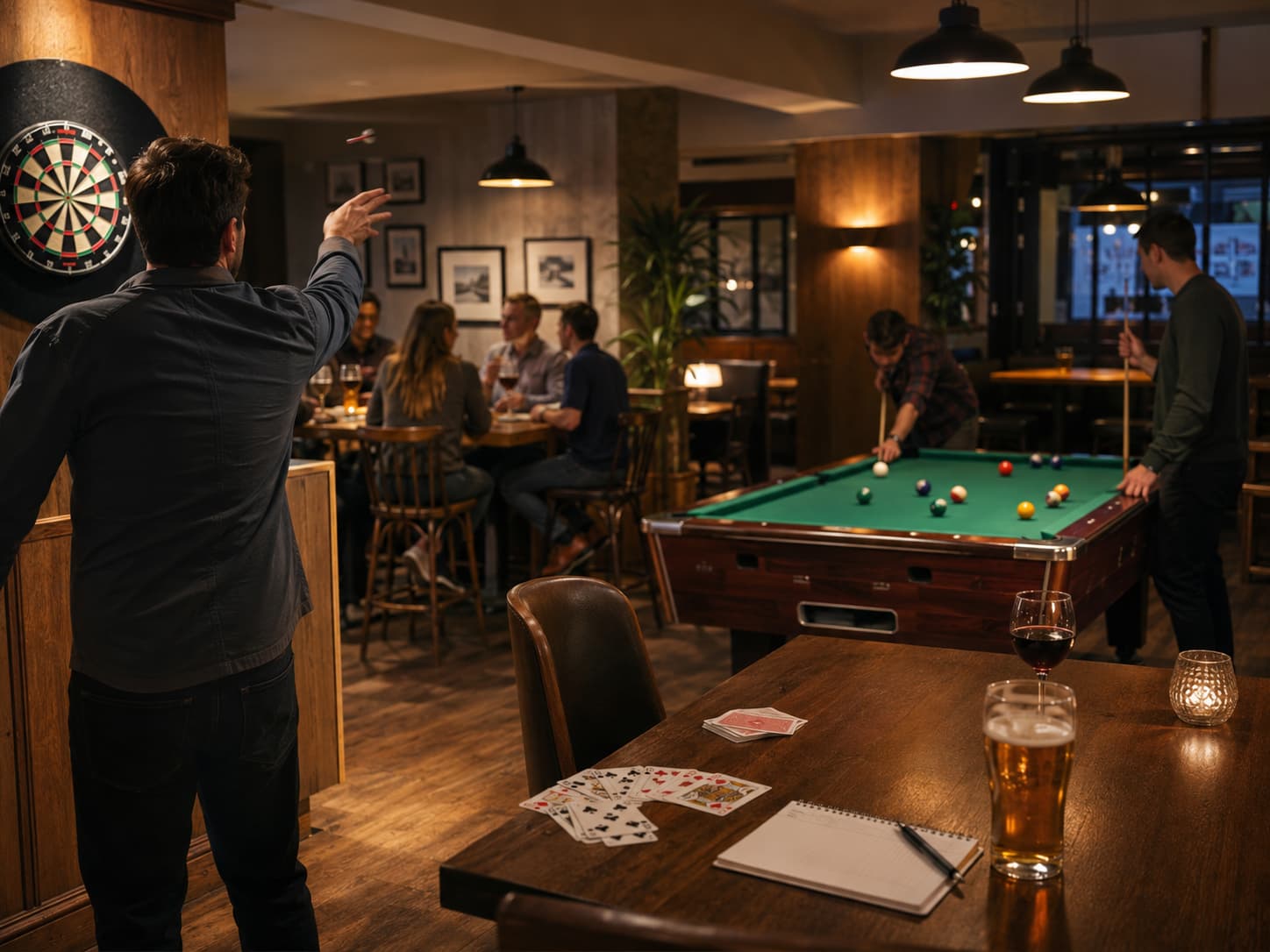
Darts works just as well for two friends as it does for a larger group. The rules can be explained in a few minutes, and short rounds leave plenty of room for conversation. To make the game more engaging, guests can split into teams or organize a small elimination tournament.
This format is especially useful when some people in the group have not met before. A shared goal makes it easier to start talking, while taking turns at the dartboard does not require everyone’s constant attention.
Pool is best suited for groups of two to eight people. Guests can play one-on-one, form pairs, or rotate players between games. Unlike loud team contests, a game at the pool table allows everyone to talk comfortably while watching the other players.
With a larger group, it helps to decide the playing order in advance. For example, the winner can stay at the table while the next person replaces the losing player. This keeps the game moving and prevents the evening from turning into a long wait for another turn.
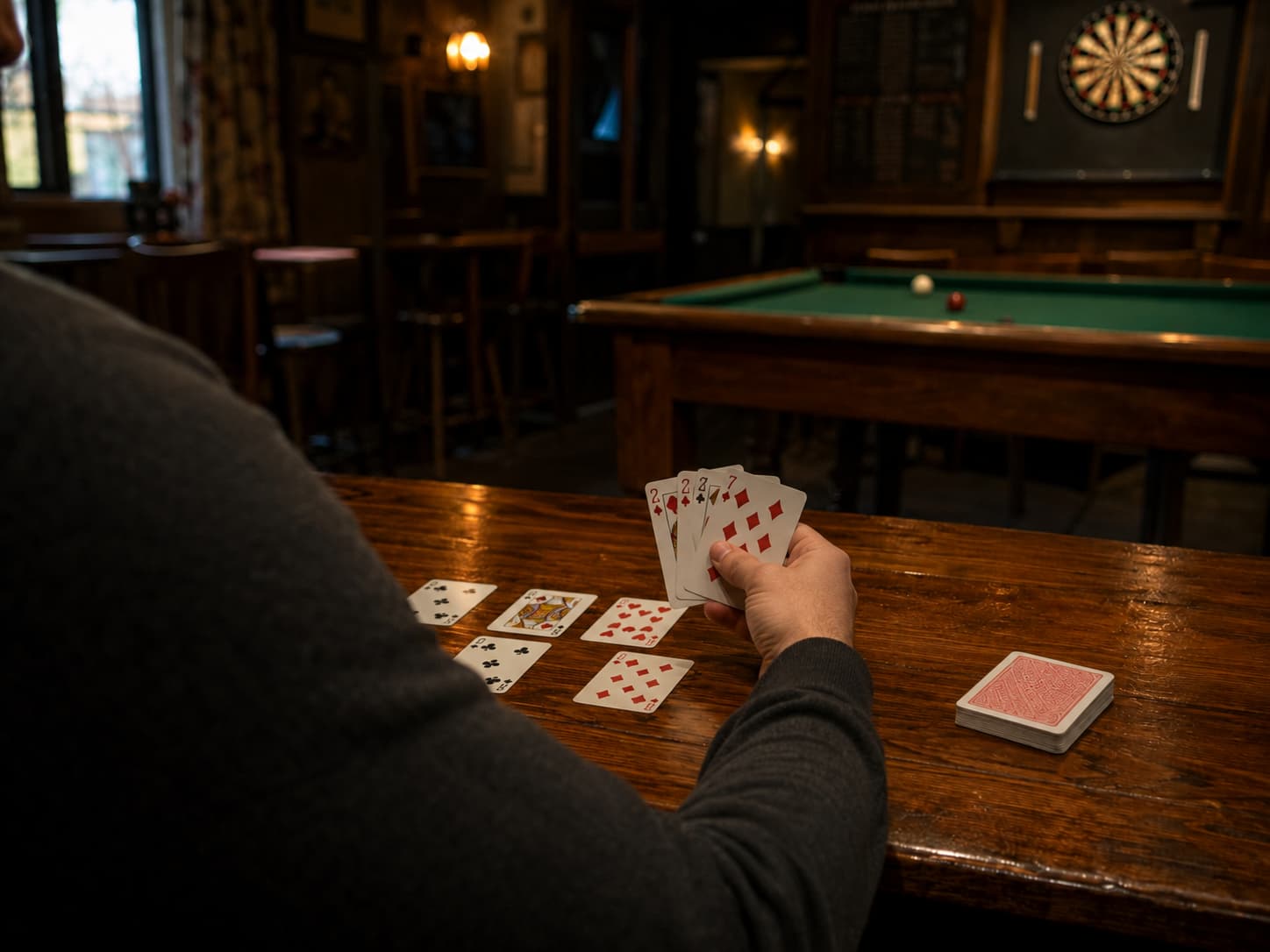
A deck of cards takes up almost no space and provides dozens of entertainment options. For a casual night out, it is better to choose games with straightforward rules and rounds that last no more than 15–20 minutes.
Depending on the group’s mood, guests can:
The important thing is to agree on the rules beforehand so disagreements do not distract from the evening. Card games are particularly useful when every pool table is occupied or when some guests would rather avoid more active entertainment.
Groups do not always arrive at the same time. One friend may be running late, the game on TV may not have started yet, and there may not be an open table available. In that situation, there is no need to sit around feeling bored or repeatedly check your messages.
This option works best as a small addition to the evening. Once your friends arrive or the group activity begins, you can put the phone away and return to darts, cards, conversation, or the live sports broadcast.
Team trivia works well for groups of eight or more. Questions can focus on sports, music, movies, local history, or events familiar to everyone. A simple setup might include several rounds of five to seven questions, with guests divided into teams.
The questions should not be overly difficult. The goal of pub trivia is to involve the group, not test encyclopedic knowledge. A good mix may include standard questions, picture rounds, and short music clips.
Darts, pool, and card games are good choices for groups of two to four people. For five to eight guests, consider a tournament or a team-based competition. Larger groups may benefit from trivia or several separate game areas, allowing people to move freely between activities.
The length of each game also matters. Short games are usually better for a casual pub night because guests can join or leave without waiting for a long round to finish.
The best entertainment should not take over the entire evening. It should create opportunities for conversation, fill quiet moments, and make the experience more varied. Darts, pool, cards, trivia, and digital games complement one another, so a group does not need to limit itself to a single format.


 Casino Night Party Ideas: Games, Setup, Food & Decor
September 4, 2026
Casino Night Party Ideas: Games, Setup, Food & Decor
September 4, 2026
 Hoboken vs Jersey City Nightlife: Which Is Better?
July 29, 2026
Hoboken vs Jersey City Nightlife: Which Is Better?
July 29, 2026
 What Is a Pub Crawl? How It Works, Types and Tips
July 28, 2026
What Is a Pub Crawl? How It Works, Types and Tips
July 28, 2026
