Pub Entertainment Ideas: Darts, Pool, Cards and More
July 31, 2026
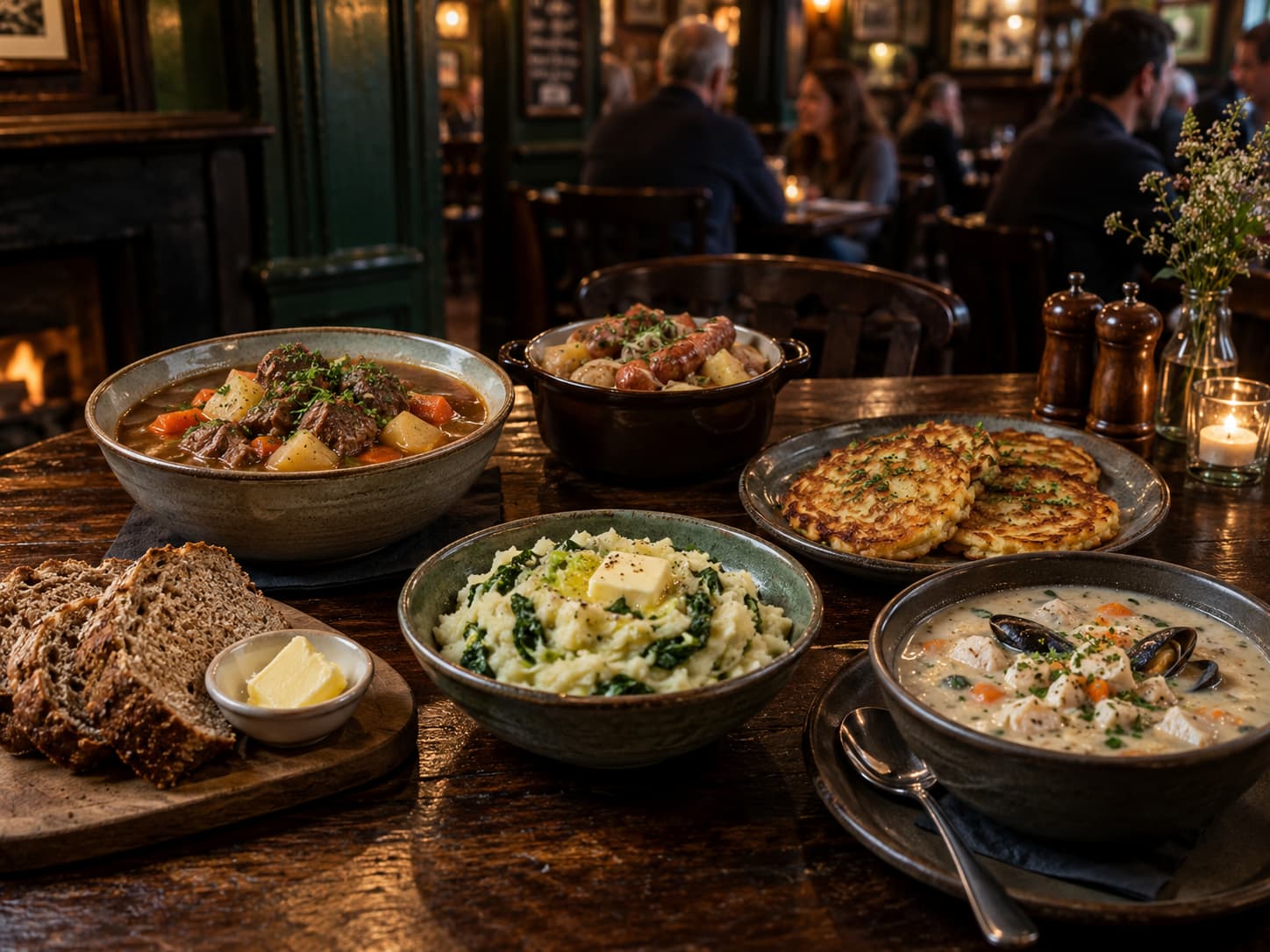
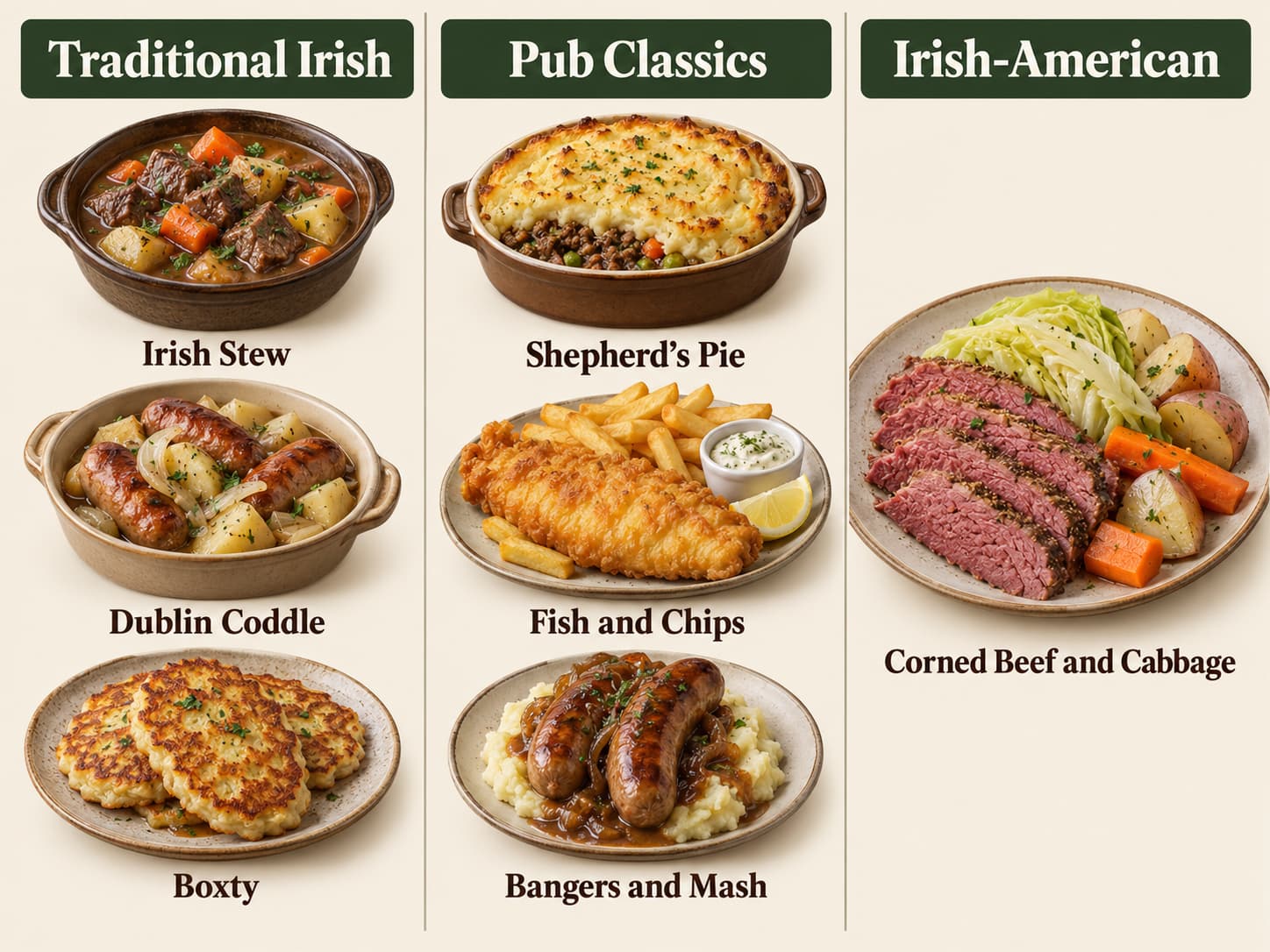
Irish pub food does not follow one fixed menu. It combines traditional dishes from Ireland, food shared with Britain and modern Irish-American additions. Irish stew and Dublin coddle have clear roots in Ireland. Fish and chips and bangers and mash are pub staples but not exclusively Irish. Corned beef and cabbage belongs mainly to the Irish-American tradition.
A pub in Dublin, Belfast or Hoboken may serve very different food. Regional ingredients, customer expectations and the size of the kitchen all shape the menu. Some pubs concentrate on drinks and snacks, while others operate as full restaurants.
The clearest way to understand Irish pub dishes is to separate their origin from where they are served today.
| Dish | Main ingredients | Classification |
|---|---|---|
| Irish stew | Lamb, potatoes, onions | Traditional Irish |
| Dublin coddle | Sausages, bacon, potatoes, onions | Traditional Dublin dish |
| Boxty | Potato pancake | Traditional Irish |
| Colcannon | Mashed potatoes, cabbage or kale | Traditional Irish |
| Champ | Mashed potatoes, scallions | Traditional Irish |
| Seafood chowder | Seafood, potatoes, creamy broth | Common in modern Ireland |
| Shepherd’s pie | Lamb, vegetables, mashed potato | British and Irish pub classic |
| Fish and chips | Battered fish, fried potatoes | British-origin pub classic |
| Bangers and mash | Sausages, mashed potatoes, gravy | British and Irish pub classic |
| Corned beef and cabbage | Cured beef, cabbage, potatoes | Irish-American |
A dish can be common in an Irish pub without having originated in Ireland.
The clearest examples of traditional Irish pub food include Irish stew and Dublin coddle.
Irish stew dates back to at least the 18th century. Its traditional foundation is lamb or mutton cooked with potatoes and onions. Carrots, leeks, turnips, cabbage and herbs appear in later or regional versions, so there is no single mandatory ingredient list.
Dublin coddle has a different character. Associated with Dublin since the late 1700s, it combines pork sausages, bacon, potatoes and onions in a slowly cooked one-pot dish. Irish stew begins with lamb or mutton; coddle begins with pork.
These dishes all use potatoes, but they are prepared and served differently.
Colcannon also has a historical connection with Halloween customs. Rings, coins or other small objects were once hidden in portions as tokens predicting marriage or fortune. That custom is separate from the everyday dish served today.
Irish brown soda bread is leavened with baking soda rather than yeast. Wholemeal flour and buttermilk give it a dense crumb and slightly tangy taste. It may accompany butter, smoked salmon, soup or chowder.
Seafood chowder reflects Ireland’s access to Atlantic fish and shellfish. Recipes vary, but the pub version is usually creamy and may contain white fish, salmon, mussels or other shellfish with potatoes and leeks or onions. It is widespread in modern Ireland, although it is not defined by one historical recipe.
A full Irish breakfast commonly includes eggs, pork sausages, bacon rashers and black or white pudding. Tomatoes, mushrooms, beans and bread depend on the establishment. The Ulster fry is a regional version associated with Northern Ireland and often includes potato bread or soda farl.
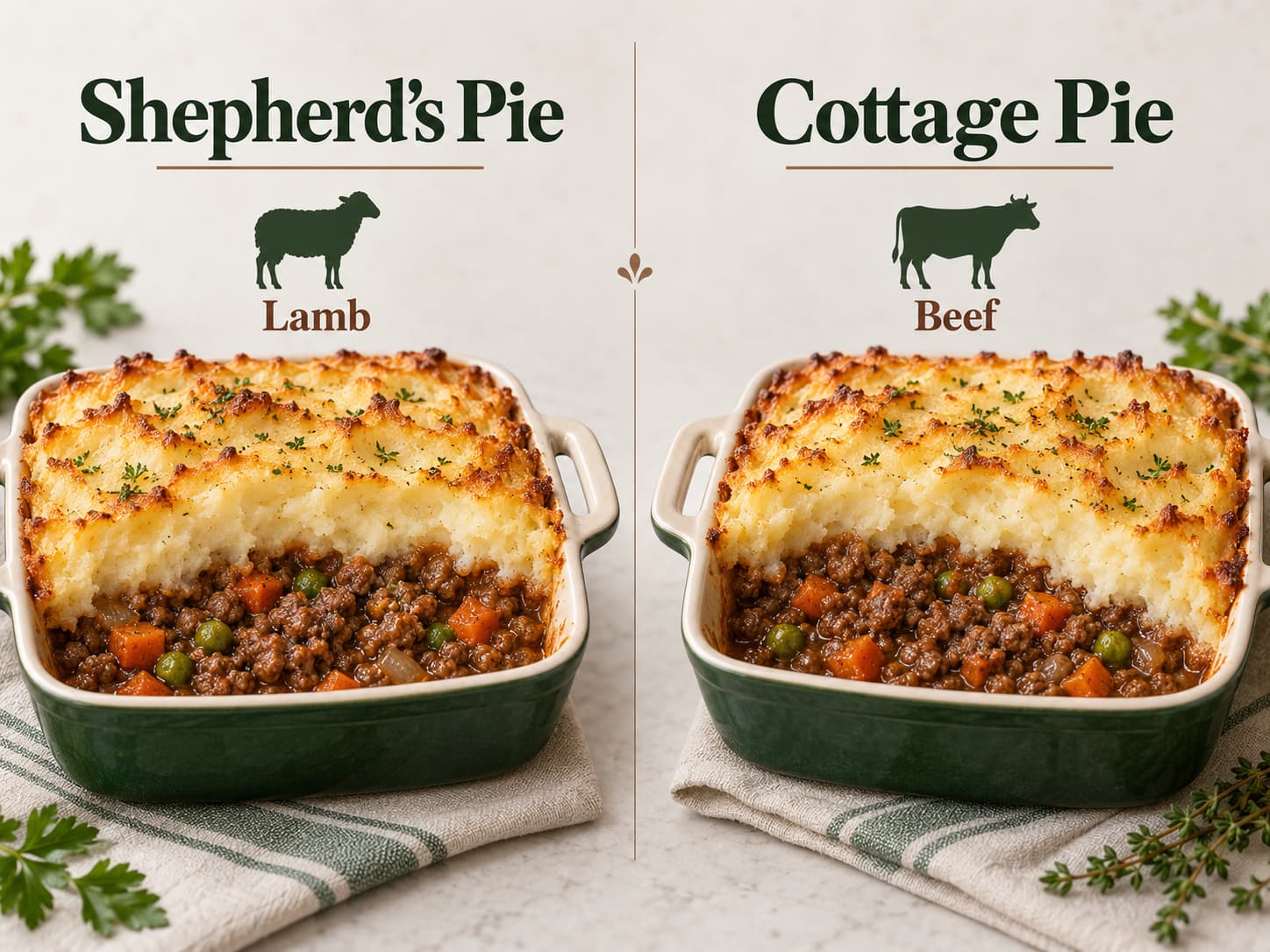
The traditional distinction comes down to the meat:
American menus sometimes use shepherd’s pie as a broad name for either version. A beef version can still be a legitimate pub dish, but cottage pie is the more precise name.
Fish and chips is now common across Ireland, but the combined dish developed in Britain. Fried-fish shops appeared in London and northern England during the 1860s. It should be described as a British-origin staple adopted throughout Irish pub culture, not as an ancient Irish recipe.
Bangers and mash follows the same pattern. Sausages, mashed potatoes and onion gravy form a traditional British dish that also fits naturally on an Irish pub menu.
Beef and stout pie is a modern pub dish. Stout adds roasted and bitter notes to a slow-cooked beef filling, which may be covered with pastry or potatoes. Using Irish stout creates a clear connection with Irish pub cooking, but does not make every stout-based recipe a historical tradition.
Corned beef and cabbage is closely associated with St. Patrick’s Day in the United States, but it was not the customary meal of most families in Ireland.
Irish immigrants in American cities could obtain cured beef brisket from Jewish butchers. Cooked with affordable cabbage and potatoes, it became a celebratory meal and eventually a symbol of Irish-American identity. In Ireland, bacon and cabbage or lamb has a stronger claim to the traditional table.
Corned beef itself has a longer Irish history: Ireland once produced large quantities of salted beef for export. That trade should not be confused with the later American dish of brisket, cabbage and potatoes.
There is no single correct first order. Choose according to what you want to try:
Availability depends on the establishment. A pub may be Irish in identity without serving every historical dish.
Modern pub menus combine regional Irish cooking, established pub standards and dishes shaped by local customers.
McSwiggan’s has operated in Hoboken since 1999, but individual dishes and weekly specials can change. Check the current food menu before visiting rather than assuming that every dish described here is available.


 Pub Entertainment Ideas: Darts, Pool, Cards and More
July 31, 2026
Pub Entertainment Ideas: Darts, Pool, Cards and More
July 31, 2026
 Hoboken vs Jersey City Nightlife: Which Is Better?
July 29, 2026
Hoboken vs Jersey City Nightlife: Which Is Better?
July 29, 2026
 What Is a Pub Crawl? How It Works, Types and Tips
July 28, 2026
What Is a Pub Crawl? How It Works, Types and Tips
July 28, 2026
